
HubSpot
Marketing, sales, and service—all in one place. It’s a lifesaver for small businesses.
- Key Features: Email automation, landing page builder, and lead tracking.
- Why it’s Trending: Its ‘AI-Powered Smart Content’ shows different messages to different users automatically.
- Best Use Case: Managing leads and building automated sales funnels.
- Pros: Excellent free version; Cons: Advanced features become expensive quickly.
Pricing: Free CRM; Paid plans start at $20/mo.
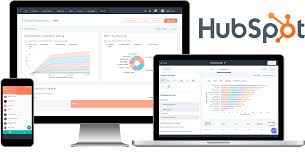
In 2026, HubSpot has transcended its reputation as just a CRM (Customer Relationship Management) tool. It is now widely recognized as a Unified Growth Platform that connects every part of the customer journey—from the first TikTok interaction to the final support ticket—within a single, AI-powered interface.
While competitors like Salesforce focus on deep customization for massive enterprises, HubSpot’s “North Star” remains ease of use. In 2026, it is the platform of choice for mid-market companies that want advanced power without the need for a dedicated team of developers.
The 2026 Evolution: Meet “Breeze AI”
The biggest transformation in HubSpot this year is the full integration of Breeze, their native AI layer. Unlike traditional AI add-ons, Breeze is embedded directly into your CRM data.
- Breeze Agents: These are autonomous “digital teammates” that handle specific roles.
- Prospecting Agent: Researches leads, scans for buying signals, and drafts personalized outreach in your brand voice.
- Customer Agent: Fields tier-one support questions 24/7 across chat, email, and social media (including TikTok and Instagram).
- Content Agent: Generates full blog posts, social media updates, and emails based on a single campaign brief.
- Breeze Intelligence: This “under-the-hood” engine automatically cleans your data, enriches contact records with LinkedIn information, and predicts which deals in your pipeline are most likely to close.
- Breeze Assistant: A conversational sidekick that lets you ask questions like, “Summarize my last three calls with this client,” or “What is our projected revenue for next month?”
Core Hubs & New Features
HubSpot is organized into “Hubs,” allowing you to pay only for what you need.
- Marketing Hub: Includes social media management (now with direct TikTok publishing and monitoring), SEO optimization, and advanced Journey Analytics to see exactly which touchpoint led to a sale.
- Sales Hub: Features a redesigned Prospecting Workspace and Sales Forecasting tools that use AI to identify “stalled” deals before they’re lost.
- Service Hub: Now includes a Help Desk interface that merges tickets and conversations into one view, plus AI-powered ticket summarization for faster handoffs.
- Content Hub: A 2026 evolution of the CMS, it now includes Content Remix, which instantly turns one blog post into an Instagram Reel, a newsletter, and a LinkedIn thread.
- Operations Hub: The “glue” of the system, offering Programmable Automation and real-time data sync with over 1,500 apps.
Pricing Structure (2026)
| Plan | Starting Price | Best For |
| Free Tools | $0 | Startups needing a professional CRM and basic email. |
| Starter | $15/seat/mo | Small teams wanting to remove branding and use basic automation. |
| Professional | $890 – $1,300/mo | Mid-market companies needing full AI agents and advanced reporting. |
| Enterprise | $3,600+/mo | Large organizations requiring custom objects and advanced security. |
Why It Is Trending in 2026
HubSpot is dominating the market because it addresses “App Fatigue.” In an era where companies are cutting down on specialized tools to save costs, HubSpot’s ability to replace a separate CMS, email tool, social scheduler, and support desk is its greatest selling point.
Furthermore, its shift toward Generative Engine Optimization (GEO) tools helps marketers ensure their content is being picked up by AI search engines like ChatGPT and Perplexity.
Pros and Cons
| Pros | Cons |
| Unbeatable UX: The most intuitive interface in the CRM industry. | Cost at Scale: Prices jump significantly once you move from Starter to Professional. |
| Native AI: Breeze AI feels like a natural part of the tool, not a “bolted-on” feature. | Rigid Customization: Not as flexible as Salesforce for highly complex, non-standard business logic. |
| Unified Data: One source of truth for Sales, Marketing, and Service. | Contact Pricing: You pay more as your database grows, which can penalize large email lists. |
Frequently Asked Questions (FAQs)
1. Is HubSpot really free? Yes, the core CRM is free forever for unlimited users. However, “pro” features like automated workflows, AI agents, and advanced SEO reporting require a paid subscription.
2. Can I migrate from Salesforce to HubSpot? Absolutely. In 2026, HubSpot’s Salesforce Integration and data migration tools are highly advanced, allowing most companies to switch in weeks rather than months.